
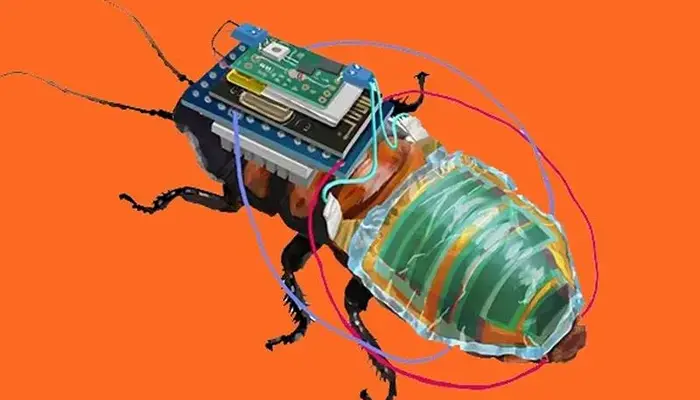
BRISBANE: Australian scientists have developed technology-enabled cyborg cockroaches that could one day be used to locate and provide basic assistance to people trapped beneath rubble following earthquakes, building collapses and other natural disasters.
According to foreign media reports, researchers from the University of Queensland and the University of New South Wales have developed a system that equips cockroaches with miniature cameras and tiny injection devices. The technology is designed to allow the insects to move through narrow and inaccessible spaces where conventional rescue teams may struggle to reach.
Scientists say the cyborg insects could potentially be deployed during earthquakes, building collapses and other difficult rescue operations to locate trapped survivors and deliver basic medical assistance before human rescuers are able to reach them.
The research has been published in the journal Advanced Science. A co-author of the study acknowledged that many people might find the idea of a large cockroach approaching them unpleasant, but said that for someone trapped beneath rubble or inside a cave, the insect could potentially make the difference between life and death.
For the project, scientists selected the giant burrowing cockroach found in northern Queensland. The species is among the heaviest cockroaches in the world and can grow to around 8.5 centimetres in length, making it large enough to carry the miniature equipment required for the experiment.
A tiny backpack has been fitted to the cockroach’s back, containing syringe cylinders and cameras. The equipment is intended to help researchers monitor and control the insect’s movement while also enabling it to perform specific tasks during search-and-rescue operations.
Previous research involving cyborg insects has largely focused on using them to locate missing or trapped people. The latest study, however, seeks to expand their capabilities by enabling them to potentially deliver basic medical assistance to survivors once they have been located.
Researchers hope the technology can be further developed and made more effective for use in natural disasters and complex rescue missions, potentially providing emergency responders with a novel tool for reaching people trapped in areas that are too narrow, unstable or dangerous for humans to access quickly.