
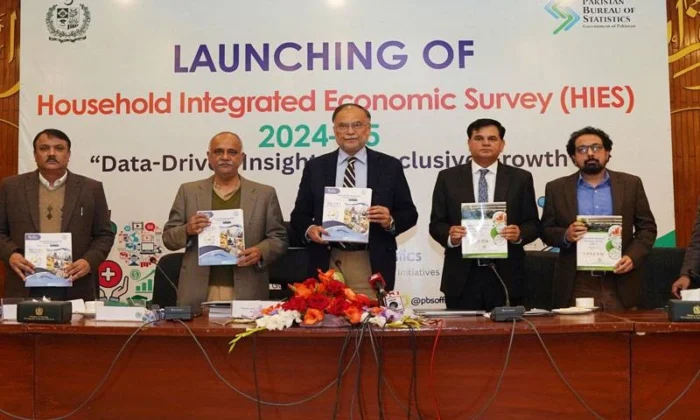
ISLAMABAD, Jan 1, 2026: Literacy rate in Pakistan has increased from 60% to 63%, according to the first Digital Household Integrated Economic Survey 2024–25 released by the Pakistan Bureau of Statistics.
The percentage of children not attending school has declined from 30% to 28%, reflecting progress in education access. Household internet access has seen a significant rise from 34% to 70%, and the proportion of individuals using the internet has grown from 17% to 57%, showing the rapid expansion of digital connectivity across the country.
Full vaccination coverage has improved from 68% to 73%, while the use of clean energy in households has increased from 35% to 38%. Access to mobile phones and smartphones now reaches 96% of households, and gender parity in early education has risen from 92% to 96%.
Health indicators also show improvement, with infant mortality decreasing from 41 to 35 per 1,000 live births and under-five mortality declining from 60 to 47 per 1,000 live births.
The total fertility rate has slightly dropped from 3.7 to 3.6 children per woman. Household income and expenditures have also increased, with the largest shares spent on food (37%) and housing and fuel (26%), followed by restaurants and hotels (6.63%), clothing and footwear (6.28%), and transport (6.21%).
The survey claims substantial progress in digital access, education, health and household living standards, marking an important milestone in Pakistan’s socioeconomic development.
Related:
Literacy rate in Pakistan 62.8pc: economic survey.