
Zulfiqar Ahmad
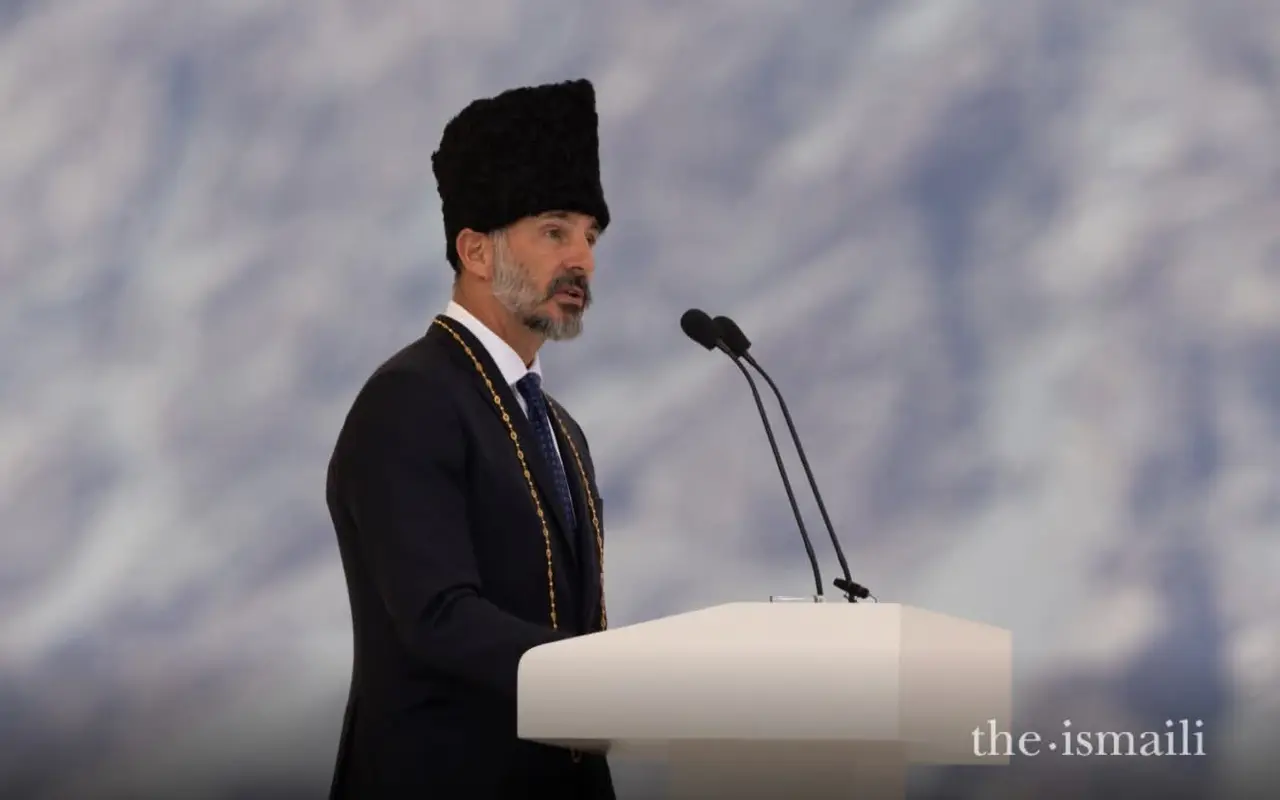
Garam Chashma, May 25, 2026: His Highness Prince Shah Rahim Al-Hussaini Aga Khan V, the 50th hereditary Imam of the Shia Ismaili Muslims, said on Monday that ultimate authority in matters of faith rests exclusively with the Imam of the time, underscoring what he described as a central principle of continuity in Ismaili interpretation.
The Ismaili Imam was welcomed upon his arrival at the Chitral airport from Gilgit-Baltistan by Khyber Pakhtunkhwa Governor Faisal Karim Kundi, Chief Minister Sohail Afridi and civil and military officials. He later reached Garam Chashma to grant Didar to his followers.
Addressing the large gathering of followers at Droshp, Garam Chashma, the Imam emphasised that Ismaili doctrine is interpreted within the framework of the Imamat and cautioned against competing or unofficial claims to the authority of the Imam of the time.
Hunzai’s Khana-e-Hikmat outlawed
He also warned against internal division arising from what he described as unauthorised interpretations of Shia Ismaili teachings, stressing adherence to guidance issued through the institution of the Imamat.
In Ismaili belief, Prince Rahim Aga Khan V is regarded by followers as a direct descendant of Holy Prophet Muhammad (PBUH) through Hazrat Bibi Fatima and Hazrat Ali, the fourth caliph in Sunni tradition and the first Imam in Shia Islam.
Beyond questions of authority, the Imam used his address in Garam Chashma to call for stronger family cohesion, expanded access to education and greater participation of women in social and economic life. He urged his followers to promote partnership within households, describing it as essential to stability and long-term community progress.
“You will face hardships in life,” he said, according to Ismaili accounts of the address, “but whenever you encounter difficulties, seek help only from Allah.”
A substantial portion of the Imam’s Farman focused on development themes, particularly early childhood education. The Imam said learning begins at birth and urged families and institutions to invest in children’s intellectual and moral development from the earliest stages of life. He described education as the foundation of long-term social and economic advancement, calling for sustained investment in institutions capable of preparing younger generations for rapid global change.
The Imam also stressed the importance of harmony within families, the Ismaili community, and broader society, stressing mutual respect, compassion and cooperation across differences.
At the conclusion of the visit, he expressed appreciation for the federal and provincial authorities for what he described as their hospitality. The address was broadly viewed by members of the Ismaili community as a reaffirmation of long-standing principles emphasising pluralism, education, gender inclusion and social cohesion.
Related:
Prince Rahim Begins Pakistan Visit with State Banquet in Islamabad
The inclusion of a link in any article generally indicates that the referenced subject is being discussed or cited. Otherwise, there would be little purpose in providing the link in the first place.
For the past fifteen years, the approach adopted by certain members of the leadership has been inconsistent with both the Imam’s guidance and the Constitution.
Khana-e-Hikmat is an institution that was approved by Mawlana Shah Karim Al-Husayni, and the relevant Farman was conveyed through the Rawalpindi Regional Council. If this institution had acted contrary to the Imam’s guidance, it is the Imam alone who holds the authority to revoke or amend his previous directives and provide new guidance. Furthermore, according to Shafiq Sachedina, Mawlana Shah Karim had instructed him to explore avenues through which Allama Sahib’s knowledge and teachings could be disseminated to the wider Jamat. If there had been any disobedience on the part of the institution, why would Mawlana have issued such guidance?
Under the Constitution of Pakistan, specific legal procedures and criteria exist for declaring an organization a terrorist entity. Were those constitutional principles and due processes taken into consideration when allegations under the Anti-Terrorism Act (ATA) were associated with Khana-e-Hikmat?
Similarly, the Ismaili Constitution contains established procedures and regulations regarding the determination of an individual’s status within the faith community. Has the leadership adhered to those constitutional provisions and procedures?
The circular issued by the Regional Councils of Gilgit and Chitral raises an important question: does it explicitly state that the action taken was based on the Imam’s guidance? If so, where is that guidance referenced?
It is difficult to avoid the conclusion that these actions have stemmed from personal animosities held by a small number of individuals within the leadership structure. Such conduct has continued for years and, if undertaken without the Imam’s authorization or guidance, would constitute a serious departure from the principles of obedience and accountability expected within the community.
I completely agree with the author. i wonder why anyone has still doubts about the clarity of the message of Imam. if you are In, there is only one path, one imam and his sole authority, if you have other opinion, you are out, no questions asked, embrace it and enjoy your own faith.
اس طرح کے یکطرفہ مضمون سے حقیقت عیاں نہیں ہوتی بلکہ زرد صحافت کی قلم فروشی برہنہ ہو کر رقصاں ہوتی ہے، اور پاکستان میں آج کل ہر صحافی کا یہی حال ہے،
دیدار کے موقع پر ہم بھی موجود تھے مگر امام الوقت نے کسی ادارے کا نام نہیں لیا اور صرف اتنا فرمایا کہ عقیدے میں تبدیلی کا اختیار امام کے پاس ہے، مگر صحافت دلالوں کے ہاتھوں میں ہے تو کچھ بھی لکھا جاتا ہے۔
@ ALI KAMIL: Oh Hunzai wala, enough with the nonsense. Behave yourself. Don’t even think about testing me or you’ll see just how lethal my words can get. Is that clear to you? If you can’t comprehend a simple instruction from the Imam’s farman, maybe English isn’t your thing and you need someone to show you the basics. And if you think exposing a fake group is yellow journalism, just wait. I’m about to drop a bombshell on your so-called group, your so-called activities, EVERYTHING. Just wait.
The cat is finally out of the bag. Let me make one thing perfectly, unequivocally clear: In my story, I have never claimed – neither explicitly, implicitly, nor by accident – that Imam Shah Rahim Al Hussaini ever referred to Khana-e-Hikmat during his recent farman.
Those who persist in peddling such assumptions are either woefully misinformed or cynically attempting to blur the line between official Ismaili teachings and the personal interpretations of the late Nasiruddin Hunzai.
For the sake of argument, let us assume that the majority of Ismailis do not subscribe to, nor recognise, the so-called Khana-e-Hikmat as an authoritative source of doctrine – let alone consider it an officially sanctioned institution endorsed by the 49th Imam Shah Karim Al Hussaini. To suggest that it represents mainstream Ismaili teaching is not merely MISLEADING and is downright BASELESS.
Indeed, the Ismaili National Council for Pakistan publicly distanced itself from the organisation as far back as 2013.
Yet, despite this unequivocal disavowal, certain individuals linked to the so-called Khana-e-Hikmat continue, quietly and relentlessly, to advance its agenda, presenting its views as if they were indistinguishable from mainstream Ismaili doctrine.
This is not simply misleading. It is a deliberate attempt to confer legitimacy on a parallel ideological platform that lacks both institutional recognition and communal consensus.
Their persistent efforts to market these ideas under the veneer of intellectual or spiritual enlightenment serve only to mislead the faithful and sow confusion within the Ismaili community.
The facts are indisputable. The so-called Khana-e-Hikmat – a religious publication and research organisation established by the late Nasiruddin Hunzai – was banned by the Ministry of Interior.
It was proscribed under the Anti-Terrorism Act of 1997 on the grounds of alleged links to terrorist networks and activities deemed contrary to the interests of the state. These are not contrived allegations. They are matters of public record.
For those daring enough to pursue a deeper discussion, I am fully prepared to lay bare the numerous controversies – complete with photographic evidence – surrounding the late Nasiruddin Hunzai and the movement that operated under the banner of so-called ‘marifat.’
For years, serious concerns have been raised about the confusion, division, and doctrinal distortions stemming from these activities. Yet far too many have preferred silence to scrutiny.
To cut to the chase: the time for ambiguity is over. I call upon the Ismaili National Council for Pakistan to break its silence and address the matter of the so-called Khana-e-Hikmat openly and without equivocation.
There can be no place for parallel preaching structures within the Ismaili community – especially those that seek to rival or undermine established institutional authority while masquerading as intellectual or spiritual movements.
The proliferation of self-appointed experts and pseudo-intellectuals on social media, recycling thoroughly discredited ideas and dressing them up as profound scholarship, only deepens confusion among ordinary believers. The community deserves clarity, not conjecture – and accountability, not evasion.
And for those who still refuse to face reality, I dare you to look the facts in the eye. It is long past time to call a spade a spade. The facts are immutable, and no amount of rhetoric, revisionism, or self-important intellectual posturing will change them. Period!
محترم ذولفقار صاحب حاضر امام نے حالیہ اپنے دربار کے موقعے پر فرمایا :کہ کسی فرد ،گروہ اور ادارے کے پاس یہ اختیار نہیں یے کہ وہ دین اور روحانی معمالات میں جماعت کی رہنمائی کرے یہ اختیار صرف حاضر امام کے پاس ہے،اور آپ ایک فرد کی حثیت سے اختیار امام کو اپنے ہاتھ میں لیتے ہوئے سوشل میڈیا کے ذریعے جماعت کی رہنمائی کرنےکی کوشش کررہے ہیں کہ خانہ حکمت غیرقانونی ادارہ ہے،حالانکہ آپ کو معلوم ہے کہ اس ادرے کی بنیاد شاہ کریم صلوات اللّٰہ علیہ کے کے زمانے میں رکھی گئی ہے،اور اس کو ختم کرنے کی اختیار بھی امام کے پاس ہے امام کے ارشاد کو چند نہیں ہوئے ہیں آپ انفرادی طور اختیار ِامام کو آپنے ہاتھ میں لیکر نافرمانی کر رہے ہیں۔
اگر واقعی حاضر امام نے ایسی کوئی رہنمائی فرمائی ہے وہ جماعت تک پہچانے کی ذمہ داری طریقہ بورڈ اور کونسل کے پاس ہے آپ کسی حثیت سے رہنمائی کرنے کی کوشش کر رہے ہو ۔
The conclusion and verdict that the respected individual has drawn from the Imam’s Farman is, in fact, contrary to the very principle emphasized by the Imam of the Time. The Imam has clearly stated that the authority to provide religious guidance belongs solely and exclusively to the Imam of the Time.
Within the Ismaili tradition, knowledge of the Imam’s recognition (ma‘rifat) has historically been conveyed by believers and scholars devoted to the Imam. The Imam Himself has not personally taught His own recognition. Once a believer attains ma‘rifat of the Imam, it then becomes his or her responsibility to follow the Imam’s guidance and live in accordance with the Imam’s instructions.
The central principle of the Ismaili faith is that religious guidance comes only from the Imam of the Time. During the recent renewal of Bay‘ah in Chitral, the Imam once again reaffirmed this centrality of the Imamat.
This raises an important question: Was the institution established under the authority and approval of Mawlana Shah Karim al-Husayni providing independent guidance, or was it imparting knowledge of the Imam’s recognition and teachings? No reasonable person can honestly claim that this institution (Khana-e-Hikmat) ever issued guidance that contradicted the Imam’s guidance.
What the Imam has prohibited is the practice of individuals issuing judgments and directives based solely on their limited personal reasoning without authorization from the Imam. Those who speak on such matters based merely on their own partial understanding are, in reality, acting contrary to the spirit and intent of the Imam’s Farman.
In light of this Farman, those making such claims should now present a clear directive from the leadership or an explicit Farman from the Imam stating that the institution established by Mawlana Shah Karim al-Husayni under the name of Khana-e-Hikmat has been abolished by the present Imam, and that from this day forward no murid may acquire or impart knowledge of the Imam’s ma‘rifat. They should also provide a Farman declaring that no murid may compose devotional qasidas in praise of the Imam.
If such a Farman truly exists and the respected individual’s statement is based upon it, then the relevant reference should be presented openly for everyone to examine.
Neither the leadership nor any individual possesses the authority to issue directives or religious rulings according to personal preferences, ignorance, or personal animosity. Such authority belongs solely to the Imam of the Time.