
Issa Khan (Kinshasa, DRC, Central Africa)
There is a revolution that never made the evening news. No protests, no slogans, no power grabs. Just classrooms, clinics, and village banks appearing one by one across the valleys of Gilgit-Baltistan and Chitral. For over a hundred years, the Aga Khans have been waging it and only now, as the world’s attention turns north, are we seeing the scale of what was built.
It began in 1946, before Pakistan even existed. Aga Khan III established Diamond Jubilee Schools for girls in the Karakoram Mountains and Chitral. At the time, the idea of educating daughters in those remote valleys was unthinkable to many. But that was the point. The Imamat’s bet was simple: if you want to change a region, start with its women. That quiet conviction became the foundation for everything that followed.
In 1967, Aga Khan IV brought these scattered efforts under the Aga Khan Development Network, a non-denominational group with a mandate to improve quality of life regardless of faith, origin, or gender. The Northern Areas became its laboratory. The turning point came in 1982 with the Aga Khan Rural Support Programme. The brief to Shoaib Sultan Khan was deceptively ambitious: double household incomes in a decade and build a model others could replicate.
Aga Khan’s vision for an educated Ummah
The method, however, was radically humble. Villagers were asked to organize themselves, save their own capital, and decide their own priorities. AKRSP just provided the technical scaffolding. It worked. Within three years the model had spread from Gilgit to Chitral and Baltistan. Former Planning Commission Deputy Chairman Sartaj Aziz visited, studied it, and admitted Pakistan finally had a viable rural development model. That model later scaled into the National Rural Support Programme.
AKDN never chased visibility, so the metrics often surprise people. Today nearly 150 Aga Khan schools in the region educate 40,000 students, and almost half are girls. The Professional Development Centre in Gilgit has trained over 21,000 teachers because, as the Aga Khan IV put it, teacher training yields greater returns than any other social investment. Health tells a similar story. More than 60 AKDN health centers now serve 750,000 people across GB and Chitral, feeding into a national network that treats 1.8 million patients a year.
When you drive through Hunza or Yasin, the evidence is physical too: 333 micro-hydro plants lighting 40,000 homes, safe drinking water reaching half a million people, and 39 million trees planted as a buffer against climate change. AKDN teams have mapped hazards for 828 villages and trained 36,000 local volunteers in disaster response, not because it’s trendy, but because they’ve been working in these fragile valleys for 65 years.
That long view is why the world is suddenly interested. The 1984 opening of the Karakoram Highway put Gilgit-Baltistan on Pakistan’s map. CPEC has now put it on the world’s. Everyone sees the trade routes, the minerals, the borders. What they’re just discovering is that the human capital is already there.
In a region now described as ground zero for climate risk, AKDN’s decades of glacial lake monitoring and community-based preparedness look less like charity and more like foresight. And in an age of polarization, a Muslim-led institution running merit-based schools and hospitals for all communities, restoring Buddhist and Sikh heritage sites alongside mosques, carries its own quiet authority. AKDN’s mission explicitly promotes pluralism, and the North has been living that experiment for generations.
Aga Khan’s diamond jubilee; AKDN’s role in development of Chitral
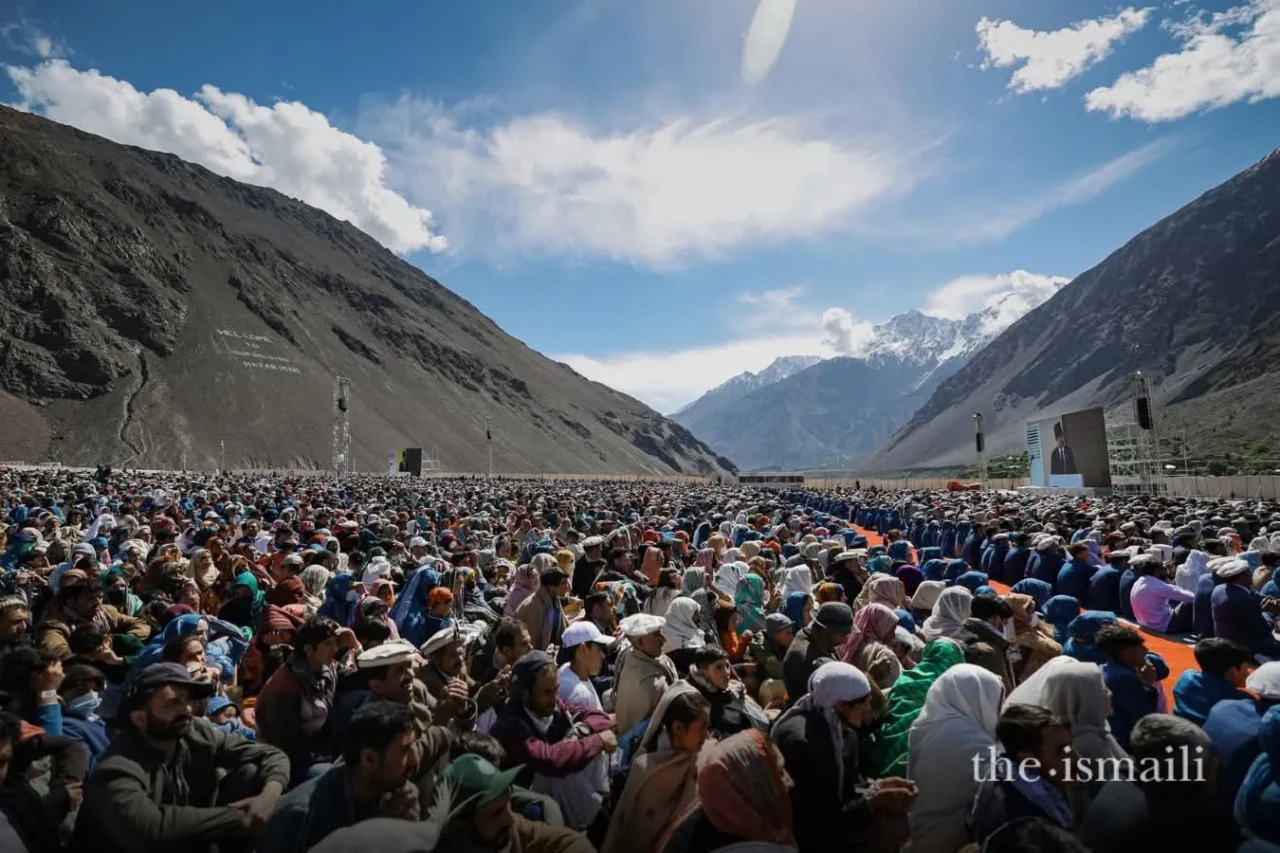
Prince Rahim Aga Khan V’s visit this May underscored the continuity. His first official trip as 50th Imam devoted five of six days to Gilgit-Baltistan and Chitral. He was received with full state honors, and President Zardari publicly credited AKDN’s longstanding contributions to social welfare. The partnership that once operated in the margins is now national policy.
So why call them “silent revolutionaries”? Because they never wanted the microphone. They built institutions instead of personalities. They handed credit to village organizations and school committees. While empires argued over who owned the mountains, the Aga Khans asked a different question: what if the people who live here had the best schools, healthcare, and access to capital? A century later, the answer is measurable. The region posts Pakistan’s highest female literacy rates and some of its lowest maternal mortality. Its civil society is strong enough to host international climate forums.
The revolution was silent. The results aren’t. And as global investors, policymakers, and climate experts head north, they’re finding that someone was there first, quietly laying the foundations for the future.
The article beautifully illustrates the ethics of Islam in action through service to humanity. It highlights the importance of education, dignity, compassion, and long-term institution building. The Aga Khans’ work serves as a powerful example of true Islamic leadership. It demonstrates how leaders can uplift people regardless of their religion or background, particularly through education, healthcare, pluralism, and human development. This is a powerful reminder of the Ismaili Imams’ constant emphasis on living faith through ethical action and responsibility toward humanity.
The article beautifully reflects the ethics of Islam in action — not through slogans or political power, but through service to humanity, education, dignity, compassion, and long-term institution building. The Aga Khans’ work demonstrates that true Islamic leadership uplifts people regardless of religion or background, especially through education, healthcare, pluralism, and human development. It is a powerful example of what Ismaili Imams have anlways emphasized: that faith must be lived through ethical action and responsibility toward humanity.
The side of humanity that should serve as a template for all our global leadership.