
Published on Aug 2, 2026 | Two minutes read time
Mehmood Ali
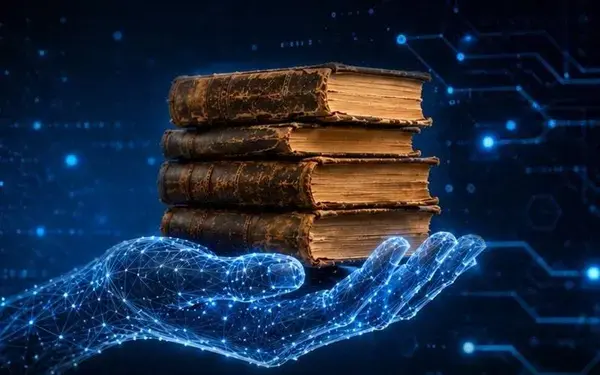
Several AI companies are reportedly buying large collections of old and rare books, scanning them for use in artificial intelligence training, and then destroying the original copies.
According to a report, booksellers have seen an unusual surge in demand in recent months. Some shops that once sold around 20 books a week are now reportedly receiving orders for hundreds, with AI companies believed to be behind much of the buying.
The books being sought are not limited to ordinary publications. They reportedly include rare historical editions, limited-print books, personal diaries, journals and other records for which surviving copies may be extremely difficult—or even impossible—to replace.
The reason is straightforward: as AI-generated material floods the internet, developers are looking for high-quality, human-written sources to train newer and more capable models. Printed books can provide precisely the kind of reliable, original material they need.
In a process known as destructive scanning, companies purchase the books, remove their bindings and scan the individual pages at high speed. Once the process is complete, the physical book is often no longer usable.
AI companies argue that digitising these works can preserve their intellectual content and make it available for future research and technological development. Critics, however, say a digital scan cannot replace the historical and cultural value of the original.
A rare book is more than its words. Its edition, paper, binding, author’s signature, handwritten notes and marginal annotations can all carry historical significance. Once the physical copy is destroyed, those details may be lost forever.
The practice also raises difficult questions about copyright and intellectual property, particularly as AI companies face growing scrutiny over how copyrighted works are obtained and used to train their models.
Historians and preservation experts warn that, if the trend continues, valuable literary and historical collections could increasingly end up in private digital databases while the physical originals disappear.
The debate therefore goes beyond artificial intelligence. It raises a larger question about what society is willing to sacrifice for technological progress: Can the knowledge inside a book be preserved digitally without losing the history embodied in the book itself?