
Tehmina Ali
A civilization does not begin with monuments or palace walls; it begins with a road. Roads are the quiet lifelines of human existence, the physical arteries through which commerce flows, emergency care reaches the vulnerable, ideas travel, opportunities flourish,and human dignity is sustained. Where asphalt meets the earth, isolation dies.
Yet, high in the shadow of the Hindu Kush, where the ancient world once traded silks, lapis lazuli, languages, philosophies, and religious faiths across glaciated passes, now stand fractured tracks, broken promises and the unyielding demands of communities that have waited far too long for meaningful investment.
In Chitral, the journey between two valleys is not merely a distance measured in kilometers; it is often a test of endurance, where broken bridges, crumbling riverbanks and suffocating dustclouds transform an ordinary journey into a daily negotiation with risk.
To travel across Chitral today is to witness an infrastructure system in complete distress. Major arterial corridors including the Chitral–Shandur Road, the Chitral–Booni Road and the vital access routes branching into Garam Chashma, Torkhow, Terich, Laspur, Borogil and other remote valleys are severely dilapidated. What should be routine two-hour transits between district hubs frequently stretch into grueling six-hour ordeals across deep, unpaved potholes and river-eroded cliffs.
The human cost of this decay is immediate and devastating. Pregnant mothers and critically ill patients frequently suffer life-threatening delays while being transported over unpaved tracks toward distant medical centers. Local farmers transporting perishable crops such as the famous potato harvests of Lot Koh face severe financial losses when bridges collapse or tracks wash out. Vehicle maintenance costs consume a massive portion of household incomes, while high freight tariffs artificially inflate the price of basic groceries.Thus, in mountain regions, poor roads are not merely an engineering failure; they become a public health crisis, an educational barrier and an economic penalty imposed simply by geography.
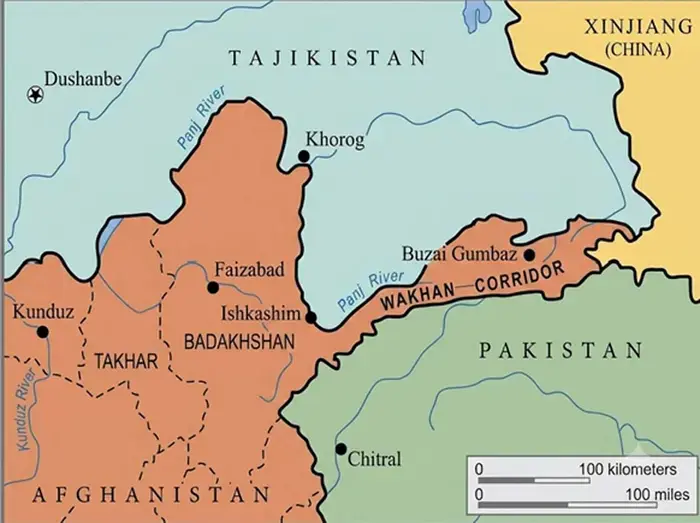
History reminds us that roads have never been neutral structures. They have always been instruments of connection, commerce and statecraft. The French historian Fernand Braudel argued that civilizations are shaped as much by their routes as by their rulers, while Peter Frankopan, in The Silk Roads: A New History of the World, demonstrates that roads carried not merely goods but religions, technologies, languages and ideas. Few regions embody this historical truth more profoundly than Chitral. Positioned at the crossroads of Central and South Asia, directly abutting Afghanistan’s narrow Wakhan Corridor, Chitral formed an important mountain corridor of the wider Silk Road network. For centuries, caravans, diplomats, and scholars crossed these passes carrying goods and ideas across the Pamir and Hindu Kush divides. As the historian Olaf Caroe famously remarked in The Pathans: “The road in the mountains is not merely a piece of engineering; it is the pledge of the state to its people that they are not forgotten behind the rocks.”
Caroe’s observation remains remarkably relevant today. A neglected road does not merely signify administrative delay; it communicates political distance between the state and its citizens.Rebuilding Chitral’s road network is not an isolated local favor; it is the reactivation of a historic trade corridor that connects Pakistan to Central Asian markets. As the world re-imagines regional connectivity, neglecting the primary highways of the Hindu Kush isolates an entire frontier from its rightful economic future.
Development economists have long argued that roads are among the most transformative public investments a state can make. In Development as Freedom, Nobel Laureate Amartya Sen contends that development should be understood as the expansion of human capabilities rather than merely economic growth. Roads expand those capabilities by enabling access to education, healthcare, employment, and markets.
Likewise, Daron Acemoglu and James Robinson argue in Why Nations Fail that inclusive institutions reveal themselves through inclusive public investment. Infrastructure is one of the clearest manifestations of whether peripheral communities are treated as integral parts of the nation or as distant afterthoughts. The debate over Chitral’s roads, therefore, is not simply about transportation; it is about citizenship, equality, and the geography of development.Measured against these principles, the condition of Chitral’s roads reveals a widening gap between the ideals of inclusive development and the lived realities of its people.
Yet theoretical ideals alone cannot sustain hope. What has transformed admiration into frustration is not geography but governance.Federal and provincial authorities have repeatedly announced grand infrastructure initiatives, only for work to stall or be executed with substandard materials.
For instance, the CPEC alternate route along the Chitral–Shandur Highway saw its groundbreaking performed with high fanfare in April 2021, yet large stretches remain incomplete, leaving local communities stranded during severe winter snows. Similarly, progress on the Chakdara–Chitral Expressway (N-45) has suffered from bureaucratic friction and shifting budget priorities despite multi-billion rupee approvals. Reporting from daily Dawn has consistently documented these systemic failures, highlighting how local elders in Garam Chashma and Upper Chitral have repeatedly called out the National Highway Authority (NHA) and the Communication and Works (C&W) department for poor oversightespecially after deteriorating roads and collapsed suspension bridges forced neglected communities to construct makeshift crossings on a self-help basis.
As every prolonged silence has a breaking point. In Chitral, that moment appears to have arrived.Historically recognized for their extraordinary patience and peaceful disposition, the residents of Chitral have been forced to use public blockades as their last remaining tool for accountability. In May 2025, thousands of residents organized under the Torkhow and Terich Road Forum launched a massive caravan of vehicles toward Booni, protesting decades of delay on the Booni–Buzund Road project. Similarly, in April 2025, residents of Harchin in Laspur Valley warned authorities that if vital snow-bound arteries were not cleared promptly, they would boycott regional festivals. These events build upon earlier movements, such as the 2021 Garam Chashma sit-ins and the 2024 Reshun road blockades organized by local Power Action Committees. The protests echoing through local bazaars today are the direct culmination of these broken promises.
Among the many neglected routes, nowhere is this tragedy of unkept promises more starkly visible than along the 157-kilometer stretch connecting Mastuj to the glaciated borderlands of Broghil. Serving as the sole lifeline for many remote villages across the Yarkhun Valley, this historic track remains a hazardous trial of dirt, boulders, and river-eroded cliffs. Enraged by the exclusion of the Mastuj–Broghil Road from the provincial Annual Development Programme despite prior commitments, thousands of residents organized under Tehreek Mastuj-Broghil Road launched a long march towards Booni. From the high-altitude reaches of northern Broghil down through the valleys, marchers on foot, motorcycles, and jeepsrallied against decades of political rhetoric, proving that not a single “paved promise” has truly materialized where it is needed most.
Mountain communities have long been known for their extraordinary patience and resilience.Life in the Hindu Kush demands resilience against avalanches, floods, harsh wintersand geographical isolation. Yet patience should never be mistaken for acceptance. Even the most enduring communities eventually reach a point where silence ceases to be a virtue and becomes a burden. The protests unfolding across Chitral therefore represent not a departure from its culture of dignity but the natural consequence of years of accumulated disappointment.
Reflecting on the endurance of mountain communities, the travelogue of Mustansar Hussain Tarar reminds us that while Chitral’s silence carries an inherent grace, when that silence turns into protest, the mountains themselves echo their cause.Similarly, the veteran journalist Raza Ali Abidi has long observed across his travels that frontier communities who smile through centuries of nature’s harshness will eventually see the rocks of patience slip when state’s neglect goes too far.
At its core, this struggle is remarkably simple. The people of Chitral are not asking for monuments. They are asking for mobility. They are not demanding privilege but parity; not symbolism but safe passage. Roads,s after all, are more than engineering projects. They are promises cast in asphalt. They carry children to schools, patients to hospitals, farmers to markets and communities toward opportunity. When those promises remain unfinished, every pothole becomes a reminder of exclusion, and every protest becomes a demand not merely for better roads, but for equal citizenship. Until asphalt replaces the dust, the voices rising from the valleys of the Hindu Kush will continue to remind the nation that the people of the mountains deserve a safe road home and the valleys continue to echo a simple truth: no nation can claim to be fully connected while its frontiers remain forgotten.