
Zulfiqar Ahmad
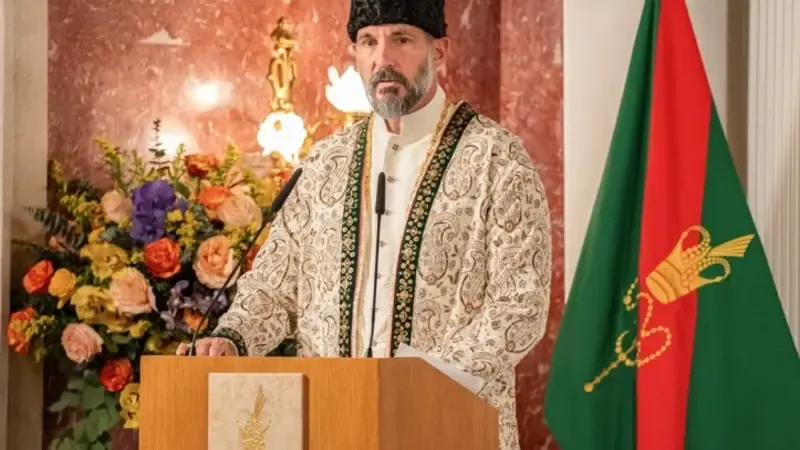
Islamabad, May 13, 2026: Across the upper and lower reaches of Chitral, anticipation is mounting as preparations gather pace for the forthcoming visit of His Highness Prince Rahim Aga Khan V, the 50th Imam of the Shia Ismaili Muslims.
Aga Khan Expected to Visit Pakistan from May 20 to 26
The spiritual leader of the Ismailis is expected in Pakistan on 20 May, offering Didar – the sacred, physical sight of the Imam – to his followers in Chitral and Gilgit-Baltistan.
Work Inaugurated on Preparation of Didargah in Parwak
From the lush valleys of the lower district to the high-altitude settlements of Upper Chitral, local authorities and community volunteers are orchestrating what organisers describe as a major religious gathering.
Banners flutter along narrow streets and village lanes, welcoming the Imam to regions where Shia Ismaili Muslims form a significant presence.
Two Sites Selected as Didargah in Chitral
Residents report that key routes to the main gathering site at Parwaklasht have been cleared and upgraded by dedicated Ismaili volunteers.
Ismaili Volunteer Martyred While Clearing Road
Officials say these preparations reflect not only the expected large turnout but also the challenges of organising an event in a remote, mountainous region with limited infrastructure and unpredictable weather.
Community involvement has been central. Volunteers from across Upper and Lower Chitral are coordinating transport, accommodation, food distribution, and crowd management.
In Nivershiru Saruz, for instance, 25 households of the Qaziyei clan have collectively raised approximately Rs4.2 million to provide meals and shelter for devotees journeying from distant valleys such as Yarkhun.
Organisers describe these efforts as a continuation of longstanding traditions of mutual support during large religious gatherings.
Preparations have also fostered interfaith cooperation. Sunni elders and Ismaili leaders have met to coordinate crowd movement and hospitality, a crucial measure in a district where communities often share infrastructure during major events.
Sunni elders join Ismailis to prepare Didargah for Aga Khan’s visit
The principal Didargahs – Parwaklasht in Upper Chitral and Garam Chashma in Lower Chitral – have undergone substantial temporary development.
Once barren and rocky, the Parwaklasht site, previously home to foxes, wolves and other wildlife, has been transformed with seating, plantation, shelters and facilities for incoming devotees.
Security and logistics are being meticulously managed. Upper Chitral Deputy Commissioner Muhammad Imran Khan is personally overseeing preparations with the Ismaili Regional Council, covering road maintenance, temporary facilities, and emergency services.
Booni Darbar and future course of action
Police and other law enforcement personnel are stationed along major routes, while the military, including the Chitral Scouts, has conducted site inspections to ensure readiness.
Lt Col Tahir Aslam, commanding officer of Chitral Scouts’ 144 Wing, recently reviewed the Parwaklasht Didargah with his team, giving a thumbs-up to security and crowd-control arrangements.
Behind the scenes, the Regional Ismaili Council Upper Chitral has emerged as the driving engine of this extraordinary mobilization, playing a pivotal role in organizing volunteers and liaising between community groups and authorities.
Council President Imtiaz Alam Khan and the first vice president Muslima Farman – the council’s standout female leader, a symbol of women’s empowerment – have been running the show, coordinating volunteers, managing logistics and keeping spirits high.
Devotees are expected from every corner of Upper Chitral – from the remote valleys of Broghil, Torkhow, Mulkhow, and Laspur, down to Reshun, and even the hilltop villages of Khot and Rech.
Aga Khan asks followers to build good relations with other communities
Local communities, meanwhile, are embracing the event as both a spiritual and social occasion, decorating roads, arranging temporary accommodations, and readying public spaces to welcome Ismaili devotees.
Even before the deedar takes place, the mobilisation has transformed Parwaklasht and its surrounding areas into a hive of activity.
Officials and organisers remain committed to ensuring the gathering proceeds smoothly and safely, leaving behind both a profound spiritual impression for participants and a blueprint of logistical excellence for future events.
As a Chitrali I personally appreciate from the core of our heart to DC Upper Chitral Mohtaram Imran Yousufzai and his Management team for his tirelessly efforts and love to make this place ” Dedargah” a comfort zone for His Highness Prince Rahim Alhussaini’ first visit to Chitral.
Our salute and heartfelt gratitude to Mohtaram Imtaiz Alam, President Ismaili Regional Council Upper Chitral and his team, All local Ismaili leadership, all bagged and none bagged Volunteers, ladies Volunteers, girl guides, boys Scouts and all Sister Community members (they devoted their times and financial support,) jamati Mukhi kamadia, Mukhinani and Kamadiani sahibans and all individuals who have been involved in preparation of this Didargah from almost 3 months.
Inshallah this mutual respect and Hormony among Communities in Chitral will be continued forever. God bless you all.
welcome to our Hazir Imam.