
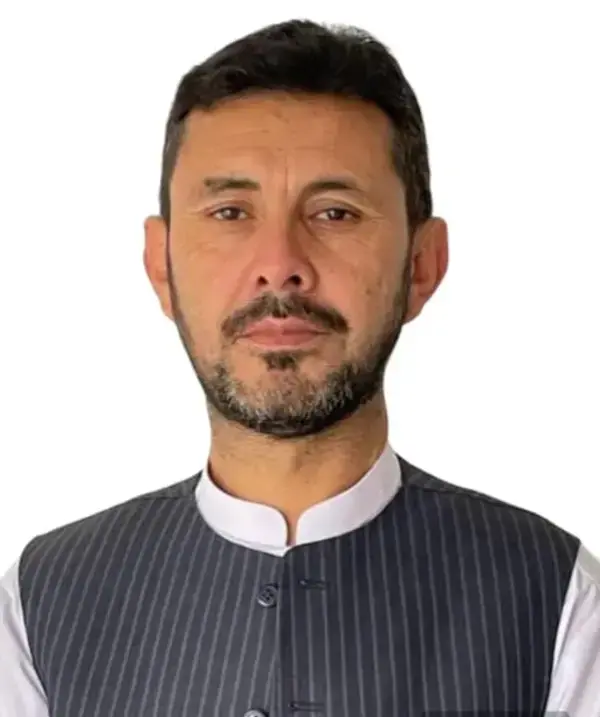
Kamal Abdul Jamil
These days, there is growing talk of resetting the system in Pakistan. In this context, the idea of creating new administrative units is also being discussed. The creation of new administrative units, or new provinces, is being presented as a possible solution to the country’s problems. Unfortunately, however, this issue has also become politicised.
The basic question is whether new provinces alone can solve our problems. This issue deserves serious and merit-based debate. Unfortunately, political parties and leaders in Pakistan have often disregarded the Constitution on matters of national importance, while at the same time raising slogans about the supremacy of the Constitution and the need to implement it. However, that is a debate for another time.
At present, Pakistan has a system comprising four provinces and one federal capital territory. Resources are allocated to the provinces under a specific formula. Parliamentary democracy is the system of government at both the federal and provincial levels. Ministries and various departments working under them are responsible for running government affairs. This system has remained in place for the past 79 years. Even during periods of military rule, the basic structure of government and the functioning of the official machinery have largely remained the same.
Failure of theSystem
There is much talk about the failure of the system, but what exactly is this “system”? How will the creation of new provinces positively affect the existing system and put an end to complaints about its failure? Even if the system fails to deliver after the creation of new provinces, what alternative would we have? Would we then abolish the new provinces and return to the existing four-province structure?
The solution to Pakistan’s problems may or may not lie in the creation of new provinces, but it certainly lies in reforming the system of governance and the way government affairs are conducted. We need clear reforms in line with the demands of the modern age and the standards of good governance. Even today, we remain tied to a system that is nearly eight decades old and was inherited from the British Crown. It is a system whose basic purpose appears to be governing the people rather than serving them. Instead of promoting a culture of public service among government officials, it continues to nurture a ruling-class mentality.
I recall that, probably in 2020, Dr Ishrat Hussain, the then Prime Minister’s Adviser on Institutional Reforms, addressed a seminar on good governance at a five-star hotel in Islamabad. While speaking about governance, he made it clear that the key to our progress lay in updating the government machinery and the way official business was conducted. At the time, there was considerable discussion about reforms, but little came of it. Later, while speaking at a webinar on police reforms, Dr Ishrat Hussain reiterated his position and presented examples to explain why institutional reforms were essential.
If we look at the matter objectively, the only serious effort to reform the government machinery and system was made during General Pervez Musharraf’s tenure. The National Reconstruction Bureau (NRB) was established under the leadership of Lieutenant General Tanvir Naqvi, and a new system of local governance and bureaucracy was introduced.
A local government system was established in which elected representatives were empowered politically, administratively and financially, while remaining accountable to the public. The bureaucracy was also reorganised accordingly. Unfortunately, it was not anyone else but politicians who ultimately undermined these reforms, and the reasons were purely political.
Is it possible to make new provinces successful while retaining a 79-year-old, outdated and largely ineffective system? The answer is clearly no. The issue is not simply that our present system of government has its roots in the colonial era. The role of successive governments in further entrenching this system in Pakistan cannot be overlooked either.
There can be several benefits to creating new administrative units or provinces. New provinces may improve administrative access, local representation and the delivery of public services. However, these benefits can reach the people in a meaningful way only when an effective system capable of delivering results is in place, the government machinery is modernised, and the public has at least some reasonable level of trust in the system and the way government affairs are conducted.
At present, the situation is such that even senior government institutions themselves appear to have little confidence in the existing machinery of government, let alone the general public.
The present government machinery and administrative system are extremely slow, outdated and frustrating. Under this system, unnecessary delays in matters of public interest have become common. Financial matters and the delivery of public services are often trapped in a confusion of procedures and rules, with little regard for the consequences.
As a result, government time and resources are wasted, public expenditure increases, and ordinary people are left facing frustration and hardship.
For example, a development project that should be completed within two years at a cost of Rs100 million may take another five years to finish, with an additional Rs200 million being spent on it. Similarly, if an institution needs 10 employees, the existing system may end up placing 20 employees there, increasing the burden on the public exchequer without necessarily improving services for the people.
It is a system in which a government officer arrives in a vehicle worth Rs50 million to inspect vegetable prices at a roadside stall worth Rs5,000. It is also a system in which an officer visits a matriculation examination hall accompanied by five armed security guards. This, indeed, is a picture of the system’s failure. If the system itself does not trust its own working parts, how can the public be expected to trust it?
The time has come for all political forces and the powers that be to sit together and seriously consider not only the creation of new provinces but also how the existing system can first be modernised and moved towards a more effective model of governance. The system must be made simpler, faster, modern, accountable and transparent. Government institutions must be seen and organised as servants of the people, not as a ruling class exercising authority over them.
A new and modernised system based on transparency, the fair distribution and effective use of resources, improved institutional performance, the delivery of social services and accountability would bring long-term benefits. It would help restore public confidence and create better conditions for the development of all administrative units.
Related:
Chitral Residents Back Call for New Province