
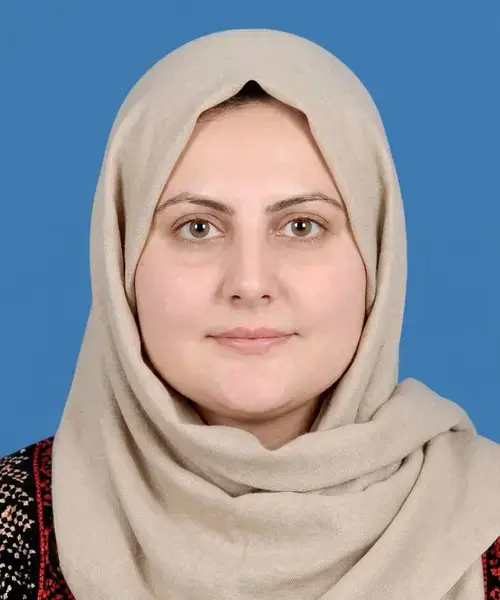
Tehmina Ali
At midnight on August 14, the country will echo with slogans. By August 15, the discarded flags may tell a different story!
August 14 is not merely a date on the calendar; it is the heartbeat of a nation. It marks the culmination of the long and arduous struggle of our forefathers, a day that symbolizes the birth of Pakistan, an independent homeland for Muslims in South Asia. This homeland came into being through the countless sacrifices of our ancestors: the mothers and daughters who endured unimaginable violence during Partition, the families who were uprooted from their homes and separated from their loved ones, and the visionary leaders whose tireless devotion transformed a dream into reality. As Quaid-e-Azam Muhammad Ali Jinnah reminded the nascent country, “With faith, discipline and selfless devotion to duty, there is nothing worthwhile that you cannot achieve.”
Yet, as we raise our green-and-white flags across the country each year, we must pause and ask ourselves a difficult question: Are we truly honouring the freedom we inherited, or have we reduced a monumental historical legacy to a day of hollow performance?
To understand the true meaning of celebration, we must first confront the realities facing our state. Patriotism is not merely the recitation of slogans; it is the willingness to confront and solve the problems that hold our people back. Pakistan is a nation of more than 240 million people, yet millions of its children remain outside the education system. The latest Pakistan Bureau of Statistics HIES 2024–25 reports a national literacy rate of 63 percent, while 28 percent of children aged 5–16 remain out of school. UNICEF estimates that 25.1 million children in this age group are currently not attending school, giving Pakistan one of the world’s highest out-of-school populations.
These figures should make us reconsider what national progress really means. A country cannot claim to be truly celebrating its freedom when millions of its children remain deprived of the education that enables them to exercise that freedom meaningfully. The World Bank’s learning-poverty measure has estimated that around three-quarters of children in Pakistan at late-primary age are unable to read and understand a simple, age-appropriate text. This is why Nelson Mandela’s famous observation that “Education is the most powerful weapon which you can use to change the world” speaks so directly to our national predicament. Education is not simply another item on the development agenda; it is the foundation upon which economic opportunity, social mobility, informed citizenship and national resilience are built. If independence gave us the right to determine our own future, education gives our people the capacity to shape that future.
The same concern extends beyond education to healthcare, livelihoods, social protection and public safety. Pakistan continues to face serious pressures on its public health system, while economic uncertainty and limited opportunities place enormous burdens on ordinary households. The World Bank estimates that the poverty rate at Pakistan’s national poverty line declined from 25.3 percent in FY2024 to 22.5 percent in FY2025, but millions of Pakistanis still live with economic insecurity and remain vulnerable to inflation, unemployment and economic shocks. These are not merely economic indicators on government spreadsheets; they represent children whose potential is constrained, families forced to choose between basic necessities, patients unable to access timely treatment and elderly citizens facing insecurity in their later years.
Our social crisis is equally troubling when it comes to the safety and dignity of women. UN Women reports that 34 percent of ever-married women in Pakistan have experienced physical, sexual or emotional violence by their husbands, while more than 80 percent of women have reported experiencing harassment in public places. In 2023 alone, 6,624 rape cases were registered nationwide, according to figures cited by UN Women from the Human Rights Commission of Pakistan, an average of one registered rape case every 45 minutes. Yet these figures represent only reported cases; stigma, fear, social pressure and weaknesses in the justice system mean that many incidents never enter official statistics. A country that celebrates freedom while women remain afraid to move freely, speak openly or seek justice cannot afford to treat gender-based violence as someone else’s problem. Respect for women, protection from harassment and accountability for sexual violence are not merely matters of law and order; they are measures of how seriously we value human dignity.
Even our national security landscape presents a sobering picture. The Global Terrorism Index 2026 has ranked Pakistan as the country most impacted by terrorism in the world for the first time, recording 1,139 terrorism-related deaths and 1,045 incidents in 2025. This is a painful reminder that the freedom celebrated on August 14 cannot be separated from the responsibility to build a society in which citizens can live without fear. True national strength is not simply the ability to confront threats after they emerge; it is also the ability to build educated, economically secure, socially cohesive and resilient communities in which extremism and violence find less fertile ground.
And this brings us to the way we celebrate Independence Day.
An occasion of such historic magnitude deserves joy, pride and celebration. But the manner in which we express that spirit has often strayed far from its purpose. Weeks before August 14, markets and roadside stalls are flooded with sharp plastic horns, firecrackers and noisy gadgets. What should be a season of dignity and reflection can quickly descend into an intolerable disturbance. Late into the night, young people engage in dangerous car drifting, one-wheeling on motorcycles and loud shouting across residential neighbourhoods, often showing little regard for patients in nearby hospitals, the elderly or sleeping children.
When August 14 arrives, roads become congested with rallies, motorcycles and blaring music. Yet visit those same streets at dawn on August 15, and another picture emerges: discarded national flags lying in the dust, trampled underfoot or floating in drains. The very symbol that represents our national identity and the sacrifices of those who created Pakistan is treated as disposable waste.
A flag thrown into the mud is not patriotism. It is a failure of civic responsibility.
Independence is a sacred responsibility, not a licence for recklessness. As Allama Iqbal asserted, “The ultimate aim of the ego is not to see something, but to be something.” To be a true Pakistani, therefore, we must move from performative celebration to purposeful contribution.
We sing, “Muhabbat Aman hai aur Amn ka Paighaam Pakistan” — love is peace, and Pakistan is the message of peace , at the top of our voices. It is time we lived by those words. Real change begins at home: teaching children to wake up on time, work hard, conserve water and electricity, respect public spaces and care for their communities. It means teaching our sons, from an early age, that respecting women, protecting the vulnerable and honouring the elderly are not optional virtues but fundamental responsibilities. It means ensuring that no parent or grandparent is abandoned to poverty, neglect or loneliness.
Our youth constitute a large and vital share of Pakistan’s population and represent the country’s greatest reservoir of energy and potential. As Quaid-e-Azam told students in 1948, “Pakistan is proud of her youth, particularly the students, who are the nation builders of tomorrow.” That potential must be directed towards education, discipline, digital and vocational skills, entrepreneurship, environmental stewardship and service to society. Instead of wasting energy on hazardous stunts and deafening horns, our young people can celebrate their country by planting trees, helping the underprivileged, volunteering in their communities, developing professional skills and pursuing excellence in their studies and careers.
When a young Pakistani studies hard to become a doctor who serves the poor, an engineer who solves infrastructure problems, a teacher who educates disadvantaged children, an entrepreneur who creates employment or a citizen who simply refuses to litter, harass or endanger others, that person is celebrating freedom in its highest form.
This August 14, let our passion become character, our enthusiasm become compassion and our love for the green flag become an enduring commitment to civic responsibility. Let us celebrate Pakistan not merely with fireworks in the sky, but with the light of education, discipline, service and hope.
We have mastered the art of celebrating Pakistan; perhaps it is time we master the art of serving it.
Let this be the year we stop merely shouting for Pakistan and start truly standing for it.
Happy Independence Day. Let us make it count.
Tehmina Ali, this is powerful. Thank you for reminding us that Independence Day is about responsibility, not just celebration. Brilliantly written.