
Fazle Yar Khan
It has been observed that the ongoing construction work on the Chitral-Mastuj Road needs appropriate level of quality and safety that such an important road project requires.
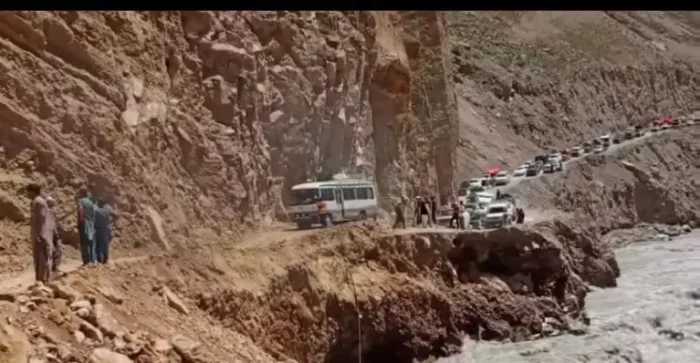
Before constructing a road in a mountainous region like Chitral, it is essential to properly understand the local geology, geomorphology, hydrology, and natural hazards of the area. One of the major concerns is the lack of adequate measures for rockfall protection in areas where the road passes beneath steep and unstable terrain. In several locations, there appears to be no proper arrangement for controlling falling rocks and debris.
Appropriate protection measures, such as rockfall barriers, wire mesh, rockfall nets, and other slope stabilization systems, should be considered wherever geological and topographical conditions demand them. This is not only a threat to the road infrastructure but also a serious risk to the lives of people travelling on the road.
A single large rockfall can block the road, damage vehicles, and potentially cause loss of life. Underestimating Rivers and GLOF Hazards Another major concern is the construction of bridges and road crossings over streams and rivers that originate from high altitude valleys and glacier-fed areas.
In Chitral, particularly during July and August, the risk of Glacial Lake Outburst Floods (GLOFs), cloudbursts, flash floods, and debris flows can increase significantly. Are the rivers and streams along Chitral Mastuj Road properly assessed before bridges are designed and constructed? Attention should be given to areas such as Broze, Koghuzi, Moroi, Barrnis, Reshun, and Kuragh, as well as other locations where major streams and flood channels cross the road. In the Hindu Kush–Himalayan region, one of the common mistakes in bridge construction is underestimating the potential magnitude of river and flood discharge.
A river that appears harmless under normal conditions can become extremely destructive when a cloudburst, GLOF, or intense rainfall occurs upstream. Such events can suddenly send massive volumes of water, boulders, sediment, and other debris downstream. Therefore, a bridge should not be designed only for the river that we see today; it should be designed for the river and flood events that may occur tomorrow.
Hydraulic Safety Cannot Be Temporary
In some locations, there is a concern that bridges are being constructed close to the existing road level and with insufficient hydraulic capacity, possibly to reduce additional work and complete the project within the planned schedule.
This approach may save time and resources in the short term, but it can result in much greater losses in the future. If a bridge is washed away during a major flood, we do not only lose the construction investment. We also lose connectivity, valuable time, public resources, vehicles, private property, and, in the worst cases, human lives.
A bridge may be considered a temporary structure in some circumstances, but hydraulic safety cannot be temporary. Bridges in flood-prone locations should be provided with sufficient height, width, freeboard, and hydraulic opening to allow floodwater, boulders, sediment, and debris to pass safely without obstructing the natural flow.
Flash Flood Channels Must Not Be Blocked
There are also several locations along the Chitral Mastuj Road where natural flash flood channels and nallas appear to have been obstructed or inadequately accommodated. Areas such as Zait Goal, near Parwak have been recently observed, the flash flood affected the local community properties also the flood expanded along the road and caused obstruction. These natural drainage channels must be identified and properly assessed before finalizing the road alignment and drainage structures.
Such flash flood routes should be considered in Greenlasht, Reshun and many others in upper district. When a natural flood path is blocked, floodwater will eventually find another route. In mountainous terrain, this can mean that water, boulders, and debris are diverted directly onto the road. The result can be extensive damage to the pavement, embankment, retaining structures, bridges, nearby agricultural land, houses, and other properties. These are not simply drainage issues. They are major road-safety, infrastructure, and public-safety concerns.
Local Knowledge Should Be Considered
For such vulnerable locations, the NHA should conduct detailed hydrological and hydraulic assessments before constructing bridges and culverts. Historical flood information should be collected not only from technical studies but also from the local communities. The people living in these valleys have witnessed major floods, GLOF events, cloudbursts, and debris flow over many years. Their local knowledge can provide valuable information about:
• Previous flood levels and extents
• Historical flood paths
• Maximum observed water levels
• Locations where boulders and debris accumulate. Natural drainage channels
• Previous bridge and road failures
• Areas affected by GLOF and flash flood events
This information, combined with proper hydrological, hydraulic, geological, and geomorphological investigations, can help determine the appropriate location, width, height, and capacity of bridges and drainage structures.
Plan Not Only for Today
Chitral-Mastuj Road is not merely a construction project to be completed as quickly as possible. It is a long term lifeline for the people of Chitral and an important connection for future generations. If natural drainage channels are blocked, slopes are left without adequate rockfall protection, and bridges are designed without properly considering extreme flood events, the same problems will eventually return possibly with much greater consequences and much higher costs.
Do not design a bridge for the river you see today. Design it for the extreme flood may face tomorrow. The objective should not simply be to complete the road on time. The objective should be to construct a safe, durable, climate resilient, and geologically and hydraulically appropriate road.
The concerned authorities, particularly the National Highway Authority (NHA) and the relevant consultants and contractors, should seriously review these vulnerable locations before the project progresses further. Failure to address these issues now could result in much greater cost in the future. More importantly it could put the lives and property of the people of Chitral at unnecessary risk.
The Chitral Mastuj Road is not a temporary road. It is an investment in the future of the region and the generations that will depend on it. Its safety and durability must therefore be given the highest priority.
(Fazle Yar Khan is Geologist /Geotech Engineer with Webuild).
Related:
Feasibility Study, Designing Of Mastuj–Broghil Road Approved