
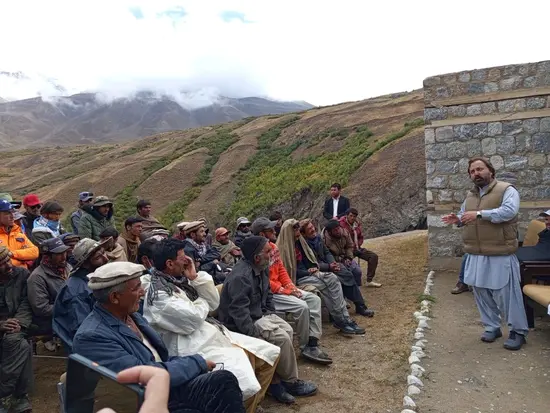
BROGHIL, Sept 8, 2025: Residents voiced their concerns over the persistent absence of essential facilities in Broghil Valley of Upper Chitral during the proceedings of the first-ever open court (khuli kachehri) organized by the district administration.
They highlighted in detail the deteriorated state of road infrastructure, the acute shortage of schools and hospitals, the irregular supply of food in government warehouses, and the complete unavailability of a veterinary doctor.
The locals further raised objections to unwarranted delays in the Grain Godown Broghil project, criticized the wildlife department for failing to provide adequate and timely information regarding Broghil National Park, and questioned the takeover of Yarkhun Lasht High School’s building by the education department.
They also drew attention to the absence of a science laboratory and the shortage of teachers in the same school, stressing how these shortcomings continued to obstruct the academic growth and future opportunities of students in the area.Locals presented a candid and unfiltered picture of their everyday hardships, and the district administration listened carefully and attentively to each issue raised.
The testimonies not only reflected the deep frustration caused by decades of neglect and isolation but also conveyed a strong expectation that direct dialogue with the authorities could finally open a path to meaningful solutions and sustainable change.
Deputy Commissioner Upper Chitral Haseebur Rehman Khan Khalil, who presided over the open court, assured the residents that the administration would address their concerns on a priority basis. He directed the relevant departments to take immediate steps and emphasized that the development of remote and underserved valleys such as Broghil remained a top priority for the provincial government.
Officials underlined that the open court not only created a vital platform for the people to voice their long-ignored grievances but also laid the foundation for a more constructive and trust-based relationship between the community and the district administration.
They described the event as an important milestone in bridging the gap between citizens’ needs and institutional action, reaffirming the government’s commitment to inclusive development across Upper Chitral’s most isolated regions.