
Oldest Known RNA Found in Woolly Mammoth Provides New Insights into Prehistoric Biology
WASHINGTON, Nov 14, 2025: Scientists have recovered the oldest-known RNA, a molecule necessary for most biological functions, from a woolly mammoth that inhabited Siberia about 39,000 years ago. This discovery shows that RNA can last longer than previously known and promises a new path for studying organisms that lived long ago.
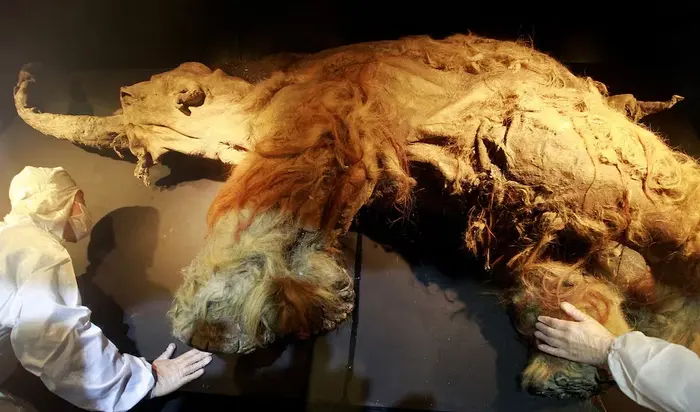
The RNA was successfully isolated and sequenced from muscle tissue in the left front leg of a juvenile male mammoth, estimated to be about five to 10 years old. The carcass, named Yuka, was discovered in 2010 in the Siberian permafrost along the Oyogos Yar coast, near the Laptev Sea. Yuka represents one of the best-preserved frozen carcasses of this extinct species. Its RNA revealed which genes were “turned on” in the tissue around the time of death, showing signs of cell stress.
Most knowledge about prehistoric organisms comes from studying skeletal fossils, but there is a limit to what these can reveal about their biology. However, the growing ability to recover biomolecules from ancient remains offers new ways to understand such organisms. The RNA discovery complements advances in the study of ancient DNA—the molecule that carries genetic instructions—and ancient proteins, which are essential for cellular function.
RNA, or ribonucleic acid, serves as the messenger between an organism’s genome and its cellular machinery. It tells cells which genes to activate or deactivate, how to regulate their functions, and which proteins to make.
“With RNA, you can access the actual biology of the cell or tissue happening in real-time within the last moments of life of the organism,” said Emilio Mármol, a geneticist, veterinarian, and bioinformatician at the University of Copenhagen’s Globe Institute. He is the lead author of the study, published Friday in Cell. “This gives us direct access to the functional landscape of the cell metabolism of woolly mammoths when they were alive, something that is not possible—at least not in the lengths we report—by using DNA or proteins alone. Adding this layer of information provides a more comprehensive view of the biology of woolly mammoths.”
RNA is more fragile than DNA and proteins. The oldest DNA recovered to date comes from animals, plants, and microbes dating back about 2 million years from sediment in Greenland. The oldest proteins came from the dental remains of a hornless rhinoceros that lived about 23 million years ago in the Canadian High Arctic. Until now, the oldest RNA recovered was from a wolf cub that lived in Siberia about 14,000 years ago.
“I think the key finding is that we can recover RNA from such an old sample. It’s proof of principle that opens the door for much more detailed analyses of gene expression patterns in Ice Age megafauna,” said geneticist and study co-author Love Dalén of Stockholm University and the Centre for Palaeogenetics in Sweden.
Yuka experienced trauma before death, with deep cuts on its hide indicating an attack by a cave lion, an extinct species of cold-adapted, bulkier cousin of today’s African lion.
“None of the marks are severe enough to have caused the death, so it’s still unclear why Yuka died,” Dalén said. The researchers detected RNA molecules in Yuka that code for proteins involved in muscle contraction and metabolic regulation under stress, possibly—but not necessarily—resulting from this attack.
Scientists once believed RNA degrades within minutes or hours after death. However, this study and others show that under the right conditions, it can survive much longer. The frigid conditions of Siberia were particularly conducive to RNA preservation.
Yuka’s DNA was also sequenced by these researchers and others in previous studies. Initially thought to be female, the genetic data revealed that Yuka was male, as indicated by the presence of both X and Y chromosomes. Yuka stood about 5-1/4 feet (1.6 meters) at the shoulder.
The researchers believe that under the right conditions, RNA can be recovered from even older remains. They note that ancient RNA offers numerous possibilities for new discoveries. “We hope our work elicits a renewed interest in exploring RNA in other old remains—not necessarily from the Ice Age or extinct species, but also from medieval or historical remains of both extinct and extant organisms,” Mármol said.–Reuters