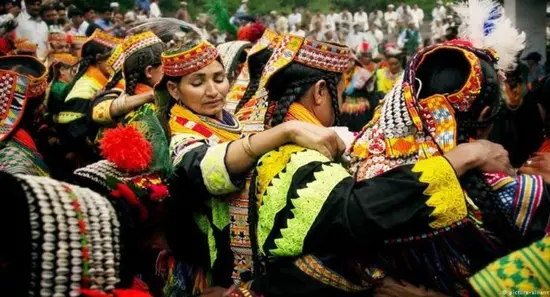
CHITRAL, Aug 31, 2025 (APP): Tucked deep within the emerald slopes of the Hindukush mountains, the Kalash Valley welcomes visitors with misty rains, blooming wildflowers, and the vibrant rhythms of Kalasha culture. This valley, home to the indigenous Kalasha people, offers more than scenic beauty—it preserves a living heritage that continues to thrive in the valleys of Bumburet, Rumbur, and Birir.
Each year, thousands of tourists journey to Lower Chitral for an unforgettable experience in a world largely untouched by modern life. Traditional drumbeats, swirling colorful dresses, and the joyous celebration of Kalasha festivals reveal a rare and enduring cultural resilience.
“Chitral is my favorite tourist destination due to its pleasant climate, rich Kalash culture, and unmatched hospitality,” said Nasir Khan, a property dealer from Peshawar. “My trip to Chitral always feels incomplete without attending a live Kalasha festival.”
For many visitors, Kalash is not just a destination—it’s a journey through time. Some trace the Kalasha lineage back to the army of Alexander the Great, while others refer to Tsiyam, a mythical lost land often celebrated in Kalasha folk songs. Regardless of their origins, the Kalasha people have safeguarded a distinct identity for generations—expressed through vibrant festivals, unique rituals, indigenous language, and handcrafted clothing.
To preserve this cultural treasure, the Kalasha Dur Museum opened in 2005 in Bumburet Valley. The museum displays over 1,500 ethnological artifacts, including traditional weapons, agricultural tools, musical instruments like the sarangi and tambura, and rare photographs and documents that chronicle Kalasha life.
“Kalasha dresses are more than garments—they’re powerful expressions of identity,” said Bakhtzada Khan, Assistant Director at the KP Department of Museums and Archaeology. “Their tools, music, and crafts reflect both innovation and the isolation that shaped their history.”
The museum also operates a cultural school and library to pass on the Kalasha language, customs, and history to future generations. However, cultural preservation alone cannot sustain the valley.
Despite its rich heritage, Kalash Valley struggles with poor infrastructure, damaged roads, limited facilities, and a lack of quality tourist accommodations. These issues affect both visitors and locals, who increasingly rely on tourism for their livelihoods.
“With better roads and camping pods, Kalash could attract more cultural tourists, especially from abroad,” Nasir added. “It would ease the burden on overcrowded destinations like Kalam, Malam Jabba, and Murree, while boosting the local economy.”
At present, the valley’s full potential remains untapped due to a lack of sustained government support. Advocates are urging the government to promote Kalasha culture through digital campaigns, develop eco-tourism infrastructure, and invest in long-term preservation efforts.
The three major Kalasha festivals—Joshi (spring), Uchau (harvest), and Chawmos (winter solstice)—form the heartbeat of their culture. Tourists who time their visits with these celebrations witness joyful dances, communal feasts, and a living connection to an ancient past.
With a population of only a few thousand, the Kalasha people stand as guardians of a cultural legacy and a symbol of harmony with nature and tradition. Yet, without urgent attention from provincial authorities, this priceless heritage may slowly fade into the mountains that have long sheltered it.
Preserving Kalash culture requires more than admiration—it demands action. Sustainable tourism, respectful development, and consistent government support can ensure that the Kalash Valley continues to inspire future generations.